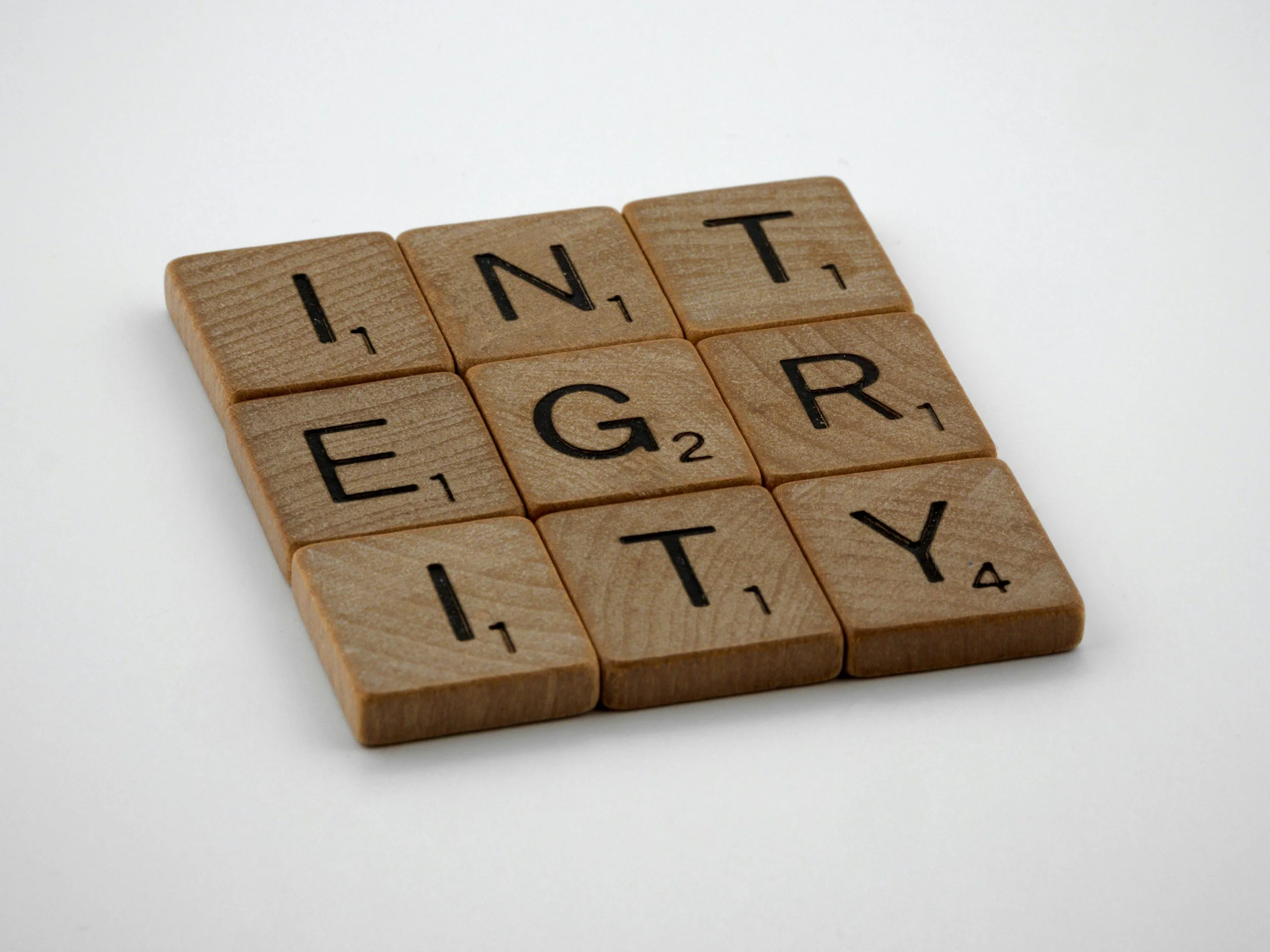
Integrity is one of those words that gathers up many different concepts. At its base, integrity means wholeness, completeness and alignment. It is about our values, beliefs, words and actions being brought together rather than being divided.
For the Christian, there is an even deeper dimension. Our lives are increasingly brought into alignment with God and His ways.
Integrity is about how we live when people are watching – and how we live when they are not.
It is about whether the person people see in public is the same person they would discover in private.
Integrity – Wholeness of Life
God Himself is the ultimate example of consistency. James 1:17 reminds us that in God there is no shifting or changing shadow. His character is consistent.
For us, integrity means that regardless of our environment or the pressures of friends, family, culture or circumstances, we increasingly remain consistent with what the Bible teaches us to believe about God and living in honour of Him.
Without integrity, we can say one thing and do another. We can present one version of ourselves publicly while living very differently in private.
Jesus repeatedly challenged this kind of divided life in the religious leaders of His day. He called it hypocrisy.
So, perhaps we could define integrity like this:
Integrity is the quality of being whole, undivided and trustworthy – where our beliefs, words and actions increasingly align, whether we are seen by others or not.
Integrity includes honesty and truthfulness. It includes keeping our word, resisting deception, transparency, consistency and doing what is right when nobody is watching.
Ultimately, integrity is about living with an undivided heart.
And I really like this simple way of thinking about it:
Integrity is being the same person in private and public.
What Does the Bible Say?
There are many places in Scripture that help us understand integrity.
Psalm 15 describes the person who walks uprightly, speaks truth from the heart and keeps their word even when it costs them.
Proverbs 10:9 tells us that whoever walks in integrity walks securely.
And Luke 16:10 reminds us that faithfulness in small things reveals something about the character of a person.
Paul also writes in 2 Corinthians 8:21 that we should be concerned not only about what is right in the eyes of the Lord, but also about what is right in the eyes of people.
Integrity therefore isn't simply about what I say I believe.
It is about whether my life gives evidence that I actually believe it.
Biblical Examples
When I think of biblical characters who demonstrated integrity, people such as Joseph, Samuel and Daniel immediately come to mind.
None of them were perfect. Integrity isn't perfection.
It is the growing alignment of our lives with what we know to be true and right before God.
And then there is Zacchaeus.
You might wonder why I would include him. After all, he was a tax collector and was reputed to have taken advantage of people.
But look at what happens when Zacchaeus encounters Jesus in Luke 19:1–10.
Something changes.
His encounter with Jesus immediately begins to affect his integrity. He commits to returning what he has taken dishonestly and giving generously to the poor.
His salvation wasn't simply something he believed.
It began to change how he lived.
There are also negative examples: Ananias and Sapphira, Gehazi and Judas. Their stories remind us that it is possible to appear one way publicly while something very different is happening within.
Integrity Is Formed
So how do we see ourselves being transformed by God's Word and Spirit in the area of integrity?
It might begin with a new believer who is still a little “loose with the truth.”
Then one day the Holy Spirit brings conviction.
They recognise that what they have done isn't right.
They repent.
They choose obedience.
They begin practising truthfulness.
Over time, truthfulness becomes increasingly natural.
Eventually, others begin to know:
“I can trust this person's word.”
That is integrity formation.
And notice that this is much more than trying harder to keep a list of rules.
The pathway of transformation might look something like this:
Encounter → Conviction → Repentance → Obedience → Practice → Formation → Consistency → Fruitfulness
This is how character is formed.
Integrity Across the Stages
So what might this look like as we move through the stages of discipleship?
An Infant may begin with:
“I recognise that lying is wrong.” There is a developing awareness of right and wrong.
A Child may say:
“I am learning to tell the truth even when it costs me.” Truthfulness is becoming a choice, even when obedience is difficult.
An Adolescent may increasingly say:
“I don't need to manipulate the truth to protect my image.” There is growing freedom from the need to manage how others perceive them.
And an Adult may be able to say:
“My life is increasingly integrated. What I believe, say and do are consistent, and people can trust me.”
This is the journey of formation.
Not perfection.
Not simply rule-keeping.
But increasing alignment between who I say I am, what I believe, what I say and how I live.
So, Who Am I Becoming?
This is where the question becomes personal.
Can I be trusted to live with integrity?
Not just when people are watching.
Not just when the consequences are obvious.
Not just when telling the truth is easy.
But in the ordinary, unseen moments of life.
Because integrity isn't ultimately about creating an impressive reputation.
It is about allowing the character of Christ to be formed within us until our public life and private life increasingly look the same.
The goal isn't simply: “I don't lie anymore.”
The goal is much deeper: “I am becoming a person whose life can be trusted.”
And ultimately, that is about becoming more like Jesus.
Reflection Questions
Is there a difference between the person others see publicly and the person I am privately?
How do I respond when the Holy Spirit brings conviction about something I have said or done?
Am I becoming increasingly trustworthy – even in the small and unseen things?
Is there an area where I am tempted to manipulate the truth to protect my image?
When I think of someone I am discipling how can I encourage them in their next step of Integrity transformation?
Closing Prayer
Lord Jesus,
Thank You that You are forming Your character in me.
Search my heart and show me where my life is divided. Where my words and actions don't align, bring conviction. Where I have compromised truth, give me courage to repent. Where I have hidden things from others, help me to walk in the light.
Teach me to be the same person in private as I am in public.
Help me to become increasingly trustworthy – not because I want to build a reputation, but because I want Your character to be formed in me.
May my beliefs, my words and my actions increasingly come into alignment with Your ways.
Make me a person whose word can be trusted.
And above all, make me more like Jesus.
In Jesus Name, Amen.
Your Next Step
This week, don't try to fix everything. Instead, ask the Holy Spirit one simple question:
“Is there an area of my life where my private life and public life are not yet aligned?”
Listen.
If He brings something to mind, don't defend it or excuse it.
Repent. Obey. Practise a different way of living.
And then keep moving forward.
Integrity is formed one obedient choice at a time.
This blog was written by Richard Botta.