Infancy #6 - Dead to Sin, Alive to God
One of the most important truths a new disciple must come to understand is this:
we are not sinners because we sin — we sin because we are sinners, that is we have a sinful nature.
This distinction matters deeply. If we misunderstand the root of the problem, we will also misunderstand the solution God provides.
The Apostle Paul addresses this clearly in his letter to the Romans. In Romans 5:12 he writes:
“Therefore, just as sin entered the world through one man, and death through sin, and in this way death came to all people, because all sinned…”
Paul is not primarily talking about the individual sins people commit day by day. The wider context of Romans 5:12–21 makes this clear. Throughout the passage, Paul is comparing Adam and Christ — two representatives, two heads, two outcomes.
When Paul says that “all sinned,” he is pointing back to Adam. Through Adam’s disobedience, sin entered the human race, and with it came death. In that sense, humanity sinned in Adam. His sin became ours. As a result, we inherit not only legal guilt before God, but also a sinful nature — often referred to as original sin.
This inherited nature explains why sin feels so natural to us. It is not simply learned behaviour; it is a condition we are born into. And because the problem is a nature, not just actions, the solution must go deeper than behaviour modification or moral effort.
This is where Romans 6 becomes so vital for new believers.
Paul asks a confronting question:
“…We are those who have died to sin; how can we live in it any longer? Or don’t you know that all of us who were baptised into Christ Jesus were baptised into his death?” Romans 6:2–3)
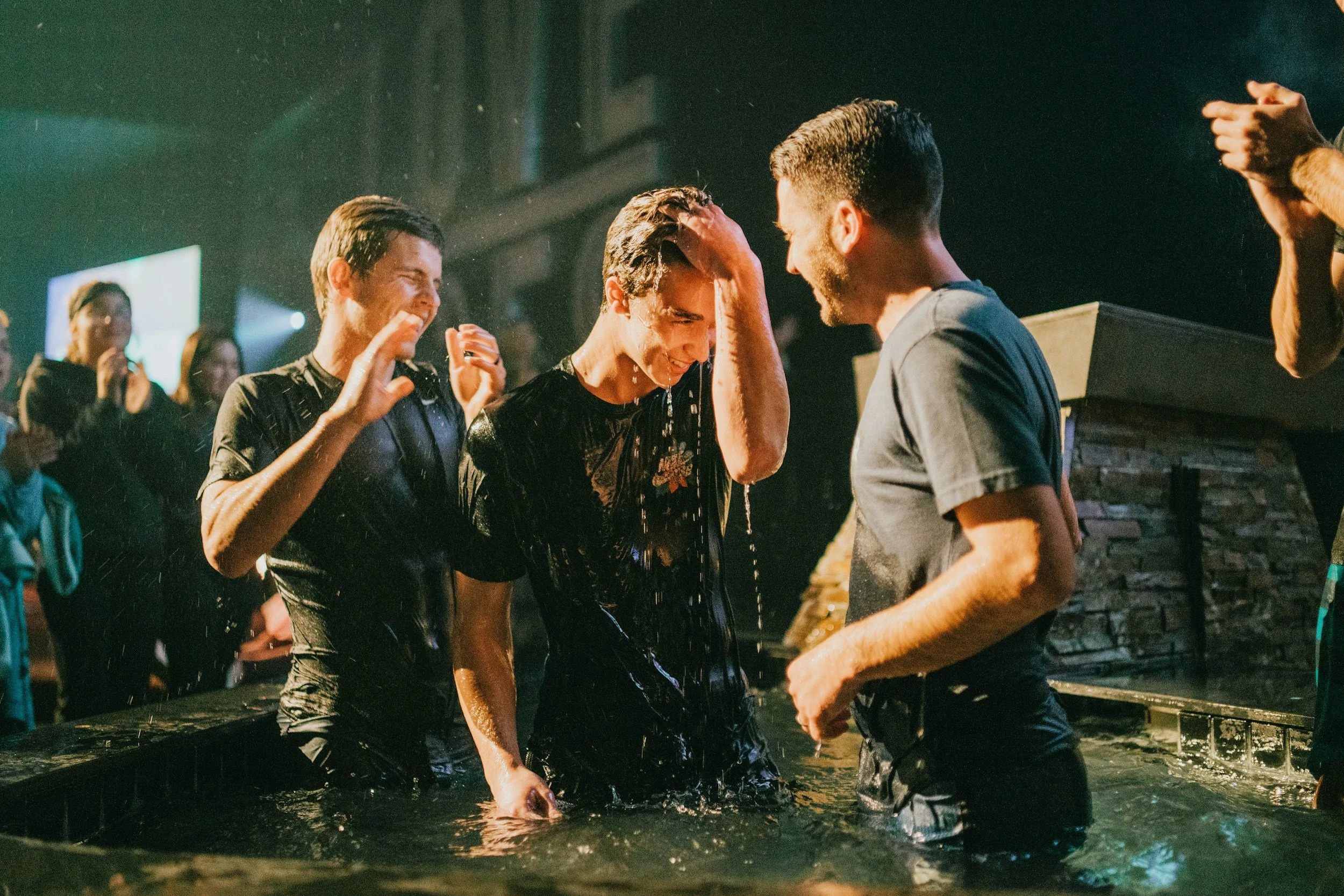
Baptism is not presented here as an optional extra or tradition or for some kind of super saint. Paul treats it as a participation — an identification with the death of Jesus Himself.
He continues:
“We were therefore buried with him through baptism into death in order that, just as Christ was raised from the dead through the glory of the Father, we too may live a new life.” Romans 6:4
In baptism, something profound is being declared and enacted. Just as Jesus truly died and was buried, so the old self — shaped and driven by the sin nature — is put to death. Baptism visibly marks the death of one kind of life and the beginning of another.
This is why baptism is not an optional extra in the Christian faith. It is an essential step of obedience and a foundational experience of discipleship. It proclaims that the old life no longer defines us.
To be “dead to sin” does not mean that temptation instantly disappears or that disciples never struggle again. It means that sin no longer has rightful authority. Its claim has been broken. The nature that once ruled has been put to death.
What emerges is something wonderfully new.
Because of Christ’s death and resurrection — and our identification with Him — we stand before God with a clean slate. Forgiven. Cleansed. Without spot, stain, or wrinkle. No longer enslaved to what once controlled us, but now capable of living fully in honour of God.
This truth is essential for infants in Christ, indeed for all who call Jesus, Lord. Without it, disciples easily slip back into guilt, fear, or endless striving. With it, they learn to live from a place of freedom — not trying to earn acceptance but growing in obedience because they already belong.
Learning that the old has died and the new has begun is not just theology. It is the foundation of a transformed life.
Reflection Questions
How have you understood sin in the past — mainly as actions you commit, or as a nature you inherited?
What does it mean to you personally to be “dead to sin and alive to God”?
If baptism represents the death of the old life, how does that shape the way you see yourself now?
Are there areas where you are still living as though the old nature has authority over you?
Have you been baptised – why or why not?
For those you are discipling – is your next challenge to them in their growth in Jesus to be baptised – why not challenge them today!
A Closing Prayer
Father God,
Thank You that You did not merely forgive my sins, You dealt with the root of sin itself. Thank You that through Jesus, the old life has been put to death, and a new life has begun. Help me to live from what You have done, not from what I fear or feel. Teach me to walk in the freedom of being dead to sin and alive to You. Strengthen me to honour You with my life as I grow as a disciple of Jesus.
Amen.
Call to Action
This week, take time to reflect on your baptism — or, if you have not yet been baptised, to consider it prayerfully. Read Romans 6 slowly and aloud. Ask God to help you live in the reality that the old has gone and the new has come. When temptation or guilt surfaces, remind yourself of this truth: you are no longer who you were. You belong to Christ, and you are learning to live a new life. If you are discipling someone why not challenge them to be baptised if they haven’t been.
This blog was written by Richard Botta.