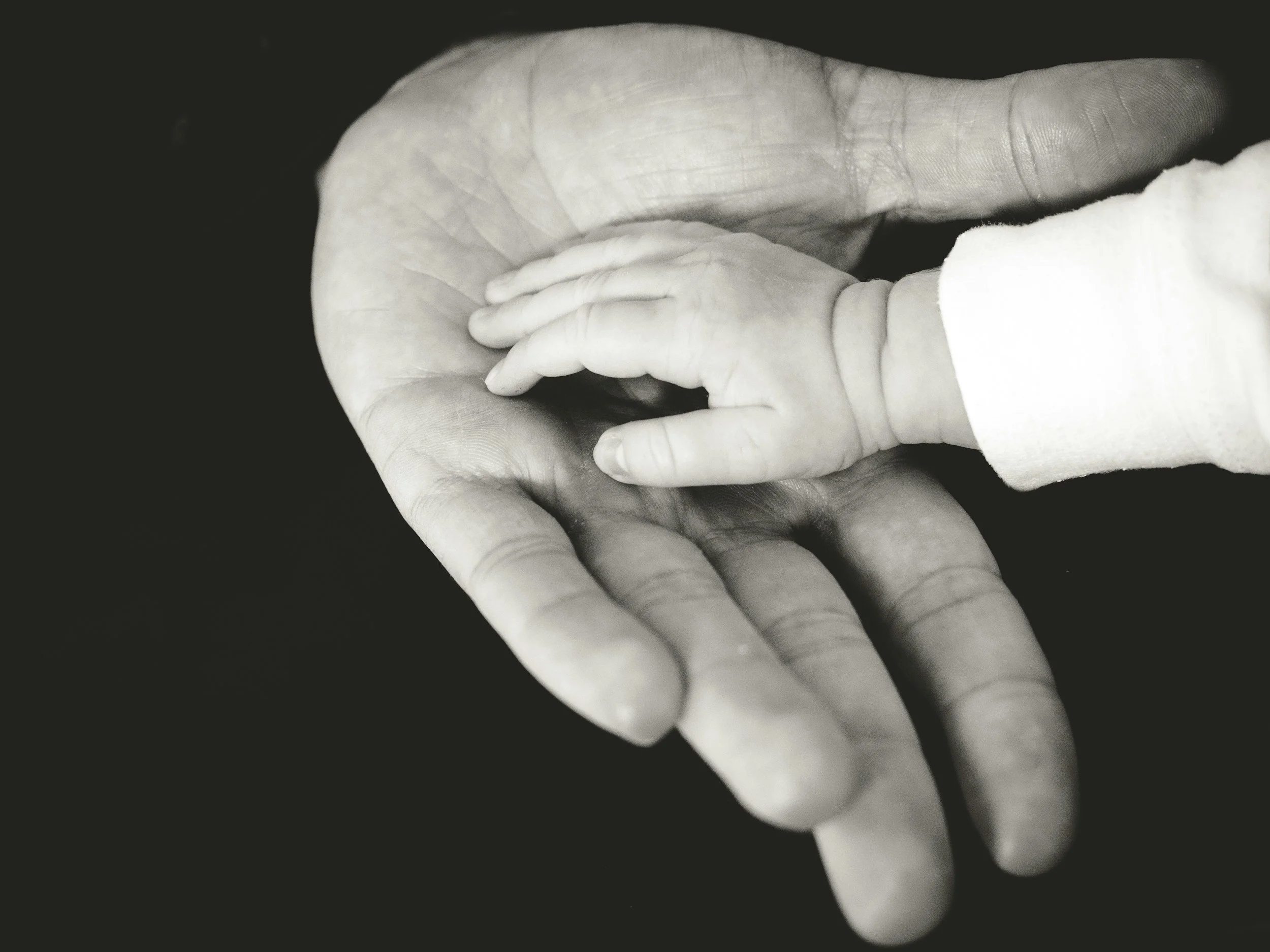
Childhood #4 – Learning to Trust the Father
As children, we instinctively trust our parents.
We begin life with an openness — a willingness to rely on others, to believe that we will be cared for, protected, and provided for. Over time, that trust is either strengthened or weakened. It is affirmed through consistent care, or challenged through disappointment.
In this sense, trust is both given and developed.
In our earliest stages, we give trust freely. But as we grow, we learn that trust is also built — formed through experience, shaped over time.
The same is true in the Childhood stage of discipleship.
The apostle John the Apostle describes this stage as “knowing the Father” (1 John 2:14). This knowing is not merely intellectual — it is relational and experiential. And at its foundation lies trust.
To know the Father is to learn to trust Him.
Trust is not formed in theory. It is formed through experience. It is built as we observe consistency. As we see promises fulfilled. As we discover that what God says, He does.
In human relationships, people are not ultimately judged by their intentions, but by their behaviour. We cannot see the heart, but we do see what a person consistently does.
So, what builds trust? Stephen Covey, in his book The Speed of Trust, outlines thirteen behaviours that foster trust:
Talk Straight
Demonstrate Respect
Create Transparency
Right Wrongs
Show Loyalty
Deliver Results
Get Better
Confront Reality
Clarify Expectations
Practice Accountability
Listen First
Keep Commitments
Extend Trust
When we reflect on these, we begin to see something remarkable.
These are not just human trust-building behaviours.
They are reflections of the character of God.
God speaks truthfully. He is perfectly just and full of mercy. He is transparent in His Word. He rights wrongs. He is faithful. He keeps His promises.
In every way, the Father is trustworthy.
As we experience Him — in His mercy, His grace, His truth, and His faithfulness — our trust begins to deepen. Not because we are told to trust Him, but because we discover that He is worthy of our trust.
This is how spiritual childhood develops. Through lived experience. Through moments where we must rely on Him. Through situations where outcomes are uncertain. Through seasons where faith is tested.
And this is not always easy. In fact, it is often in difficulty that trust is most deeply formed. The Old Testament gives us many examples of this kind of growth. Consider Job, who in the midst of profound suffering declares: “Though He slay me, yet will I hope in Him” (Job 13:15).
This is not theoretical trust. This is trust forged in trial.
As we grow through the Childhood stage of faith, we are invited into our experiences of God — moments where we must choose to trust the Father, even when we do not fully understand His ways.
And in those moments, something deep is formed within us.
Trust grows.
Confidence increases.
Relationship strengthens.
For to know the Father is not only to experience Him — it is to trust Him.
Reflection Questions
1. In what areas of my life do I find it difficult to trust God?
2. Can I identify specific moments where God has proven His faithfulness to me?
3. Do I base my trust in God on truth and experience, or on circumstances and feelings?
4. As a disciple-maker, am I helping others recognise and reflect on God’s faithfulness?
Closing Prayer
Father,
Thank You that You are completely trustworthy. Thank You that You are consistent, faithful, and true in all Your ways. Teach me to trust You more deeply. Where I doubt, strengthen my faith. Where I fear, remind me of Your faithfulness. Help me to recognise Your hand at work in my life, and to grow in confidence as I walk with You. And as I disciple others, help me to point them toward Your unchanging character.
In Jesus’ name, Amen.
Call to Action
This week, reflect on one area of your life where trust in God is being tested.
Write down one way God has been faithful to you in the past, and use it as an anchor for your present situation.
As you disciple someone, ask them: “Where have you seen God come through for you?”
Trust grows when we remember.
Spiritual childhood matures as confidence in the Father deepens.
This blog was written by Richard Botta.