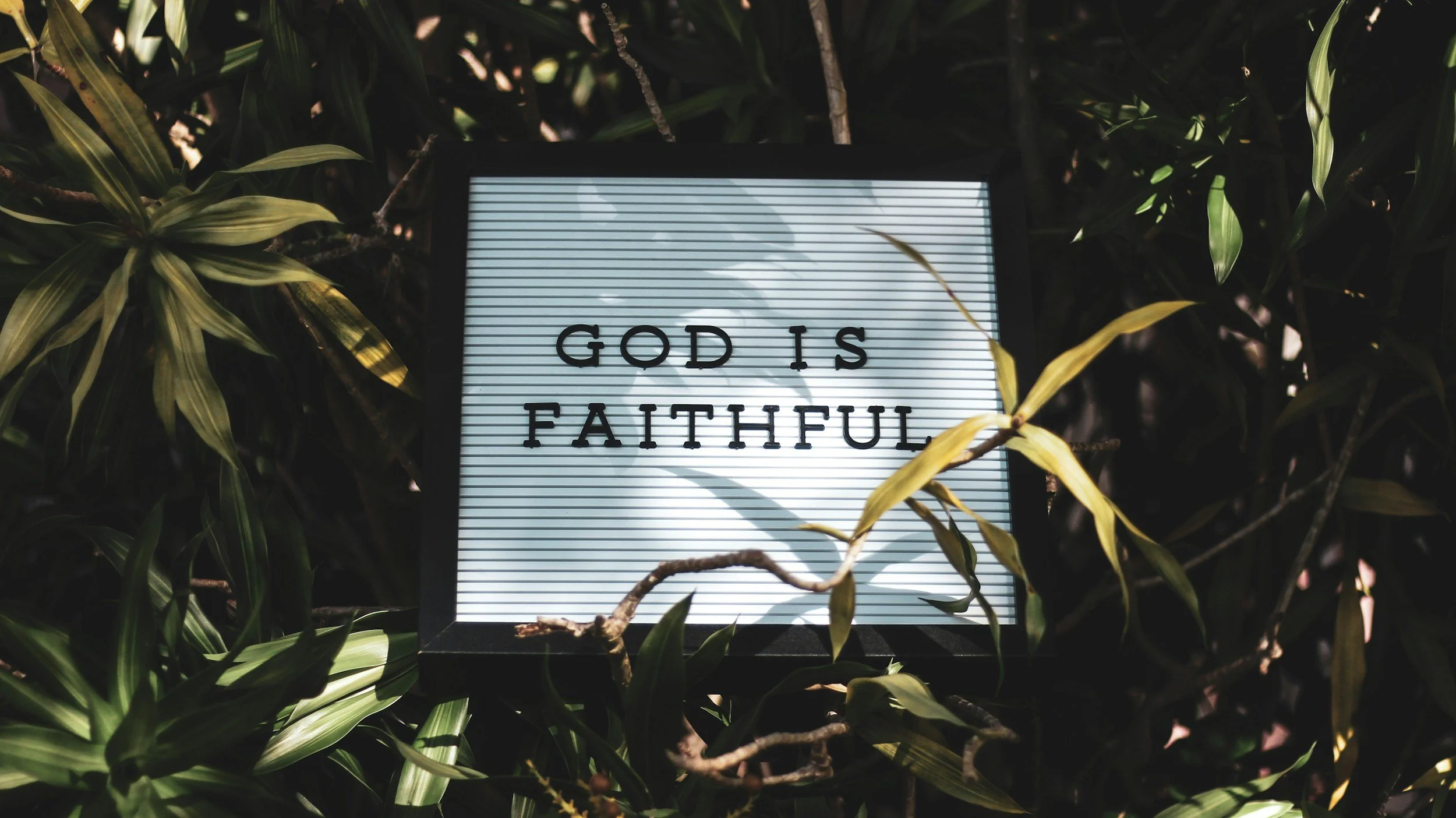
Faithfulness is an important character trait to develop.
Being faithful, reliable, taking responsibility and being accountable are truly important elements of our lives as we grow in Christ. First and foremost, in a Biblical sense, faithfulness exemplifies God's loyalty to His people. It is important to us as we follow Jesus because God calls us to faithfulness, and it is part of the fruit of the Spirit in Galatians 5:22–23.
Faithfulness, as the Bible portrays it, describes a relationship that has at its core trust and commitment. The Hebrew foundations of faithfulness carry meanings such as strengthen, support and hold up, and are used in the imagery of pillars that provide support. Other words that help us understand the concept include firmness, constancy and trustworthiness. That gives us a wonderful word picture. A faithful person is someone upon whom others can increasingly lean.
God is always true to His covenant, and this is described throughout Scripture as God's faithfulness. The Apostle Paul reminds us: “If we are faithless, he remains faithful, for he cannot disown himself.” 2 Timothy 2:13 God's faithfulness is foundational to His character. Our faithfulness to God is our response to His faithfulness to us. God's faithfulness is gracious. Our faithfulness is our response to this grace. And this faithfulness is itself generated by the Spirit as part of the fruit of Christ-honouring living.
Faithfulness and Fruitfulness
Faithfulness and fruitfulness are closely intertwined. Jesus tells us in John 15:4–5 that we are to remain in Him and that, as we remain in Him, we will bear fruit. This is important because we don't want to separate faithfulness from fruitfulness.
Faithfulness is evidenced by fruitfulness.
Faithfulness centres on commitment and loyalty – remaining in Jesus and continuing to live faithfully in relationship with Him. Fruitfulness describes the visible consequences that flow from that faithful relationship. If we are looking for evidence of growth in a disciple, we should therefore expect to see fruit. Not fruit produced by frantic striving or religious performance, but fruit that naturally flows from a life that is faithfully abiding in Jesus.
Jesus doesn't tell us to manufacture fruit. He tells us to remain in Him. And as we remain in Him, fruit comes. This distinction matters because neither faithfulness nor fruitfulness is ultimately about keeping a record of our accomplishments. It is about relationship. The question isn't simply: “How much have I achieved?” It is: “Am I faithfully remaining in Jesus, and is His life becoming increasingly evident through mine?”
Faithfulness Evidenced through Stewardship
Jesus' teaching on faithfulness is commonly connected with stewardship. In Matthew 25:14–30, Jesus tells the parable of the talents. The master entrusts his servants with what belongs to him and later assesses how they have stewarded what they received. The faithful servants are commended. Paul makes the principle clear in 1 Corinthians 4:2: “Those who have been given a trust must prove faithful.”
Faithfulness therefore involves what we do with what God has placed in our hands.
Our time.
Our relationships.
Our finances.
Our abilities.
Our opportunities.
Our responsibilities.
Our influence.
Faithfulness asks: “Can God trust me with what He has already placed in my hands?” Jesus makes this principle particularly clear in the parable of the Minas in Luke 19:12–27, where the faithful servant is told: “Because you have been trustworthy in a very small matter, take charge of ten cities.” There is something powerful here. Jesus made a point of connecting our use of money with faithfulness. It was John Wesley who said, “The last part of a man to be converted is his wallet.”
Faithfulness in little things leads to faithfulness in much.
God's kingdom operates on faith. As we demonstrate faithfulness with what God has already entrusted to us, we become people whom God can entrust with greater responsibility, opportunity... This isn't about promotion for our own status. It is about greater stewardship for God's purposes. Jesus makes a similar connection in Luke 16:10–13, where faithfulness in handling what appears to be little is connected with being entrusted with what is truly valuable. This means the seemingly insignificant things matter.
How we handle our money matters.
How we keep our word matters.
How we respond when nobody is watching matters.
How we handle small responsibilities matters.
Faithfulness is formed in the ordinary long before it is demonstrated in the extraordinary.
Biblical Examples
There are many wonderful examples of faithfulness in Scripture.
Daniel remained faithful to God even when faithfulness carried a significant personal cost.
Joseph demonstrated faithfulness in radically different circumstances – as a slave, a prisoner and eventually as a leader in Egypt.
Ruth demonstrated extraordinary loyalty and commitment to Naomi when she could have chosen an easier path.
Timothy provides an example of a disciple whom Paul could trust and entrust with responsibility.
Scripture also provides warnings.
Judas ultimately proved unfaithful to Jesus.
Demas, whom Paul describes as having deserted him because he loved the world, demonstrates the danger of allowing competing loyalties to undermine faithfulness.
Ananias and Sapphira provide a sobering example of dishonesty and unfaithfulness in the early church.
These examples remind us that faithfulness isn't simply about what we say we believe. It becomes visible in how we live.
Faithfulness Is Formed
So what does it look like to see God's Word and Spirit transform us in the character trait of faithfulness? It may begin with recognising that we can be fickle, inconsistent and self-focused. Then comes responsibility.
We begin to understand that our choices affect others and that our commitments matter.
We learn to keep our word.
We learn to complete what we have been given to do.
We become increasingly dependable.
Over time, dependability becomes faithfulness.
And as we demonstrate faithfulness in the little things, we become increasingly capable of being entrusted with more.
The journey might look something like this:
Recognition → Responsibility → Dependability → Consistency → Trustworthiness → Fruitfulness → Greater Stewardship
That is character formation.
Faithfulness Across the Stages
So what might this look like across our four stages of discipleship?
An Infant may begin with:
“I am beginning to recognise that I can be fickle and self-focused in my faithfulness.”
There is an emerging awareness that following Jesus calls for something more than good intentions.
A Child may increasingly say:
“I am learning to be faithful and dependable.”
They are beginning to practise keeping commitments, taking responsibility and doing what they have said they will do.
An Adolescent may increasingly say:
“I can be relied upon by my family, friends and those around me.”
Faithfulness is becoming part of their character. They are developing the strength to remain committed even when circumstances or feelings change.
And an Adult may increasingly say:
“I am a pillar – reliable, trustworthy and steady, not easily tossed around by circumstances or opinions.”
That is mature faithfulness. It is also the kind of person whom God can increasingly entrust with greater responsibility.
So, Who Am I Becoming?
Our question throughout this Character series remains:
Who am I becoming?
Can people rely on my word?
Do I take responsibility when something is entrusted to me?
Am I faithful when nobody is watching?
Do I remain committed when something becomes difficult?
Is my faithfulness producing visible fruit?
And perhaps the most important question:
Is God finding me increasingly trustworthy with what He has placed in my hands?
Faithfulness is not about becoming impressive.
It is about becoming trustworthy.
It is not about striving to produce a record of achievements.
It is about remaining in Jesus, allowing His life to produce fruit through us.
And as we faithfully steward what He has already entrusted to us, we can increasingly become people whom God can trust with more.
Faithfulness in little things prepares us for faithfulness in much.
That is the character God is forming in us.
Reflection Questions
In what areas of my life am I consistently dependable, and where am I still inconsistent?
Can others trust my word, even when keeping it becomes inconvenient or costly?
What has God already placed in my hands that I need to steward more faithfully?
How am I promoting faithfulness in those I am discipling?
Is there an area of “little” responsibility where God may be inviting me to demonstrate greater faithfulness before entrusting me with more?
Closing Prayer
Lord Jesus,
Thank You that You are faithful.
Thank You that Your faithfulness does not depend upon my perfection or performance.
Teach me to respond to Your faithfulness by becoming increasingly faithful myself.
Help me to recognise the responsibilities, relationships, opportunities, resources and abilities You have already placed in my hands.
Teach me to be faithful in the little things.
Make me dependable when others need to rely upon me.
Help me to keep my word, take responsibility and remain faithful when circumstances become difficult.
Most of all, help me to remain in You, knowing that apart from You I can do nothing.
May the fruit of Your life become increasingly evident through mine.
And as I demonstrate faithfulness with what You have entrusted to me, prepare me to carry whatever greater responsibility You may place before me.
In Jesus' name, Amen.
Your Next Step
This week, identify one thing God has already entrusted to you that you could steward more faithfully.
It might be a relationship, responsibility, financial resource, opportunity, commitment, ability or area of influence.
Don't look for something impressive.
Look for something small and real.
Ask yourself:
“What would greater faithfulness look like here?”
Then do it.
Remember:
Faithfulness in little things prepares us for faithfulness in much.
And as we remain faithful to Jesus, His life becomes increasingly visible through us.
That is fruitfulness.
This blog was written by Richard Botta.